
02 · Framework

MatchCode DNA Layer

Mind Code

Sixteen cognitive patterns for how you take in, decide, and act on information.

Mind Code is the cognitive layer of your MatchCode DNA. It tells you how you process the world — where your attention goes, what kind of evidence you trust, and how you reach a decision when the room is split.

Man considering a chess move with glasses

What it is

The shape of the framework.

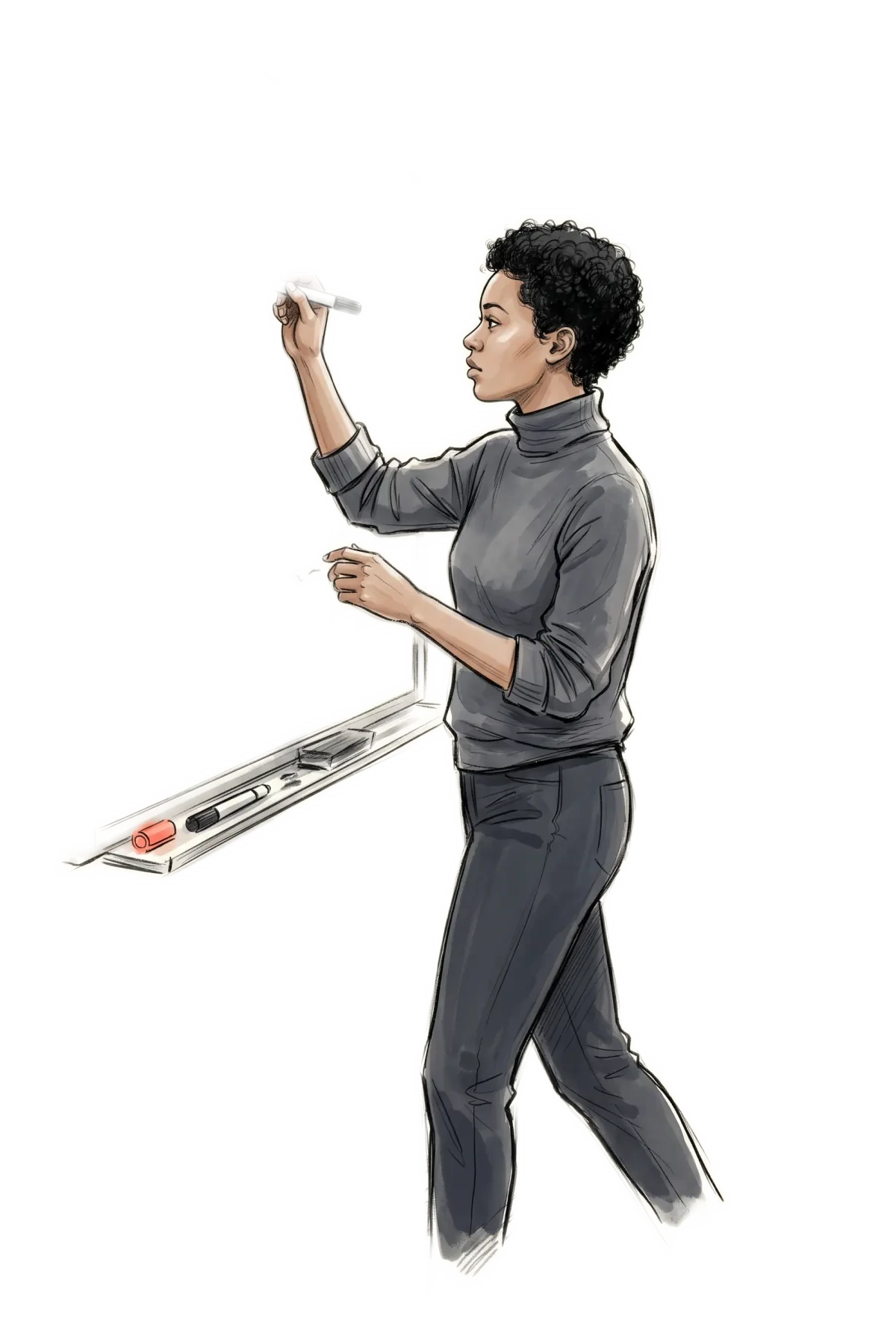
Strategist working through ideas at a whiteboard

Where Core Traits says how much, Mind Code says which way. It's a four-axis map: where your energy comes from, what kind of information you reach for, how you weigh decisions, and how you'd rather move through life. Each axis has two poles, and your read is the four-letter combination — sixteen patterns in total.

The four-letter codes (like INTJ or ENFP) are descriptive, not predictive judgements. The same code in two different people can look different in practice — Mind Code tells you the shape of someone's thinking, but Core Traits, Growth Type, and Love Code add the colour. We layer them so you get a full picture, not just one sticker.

Origin

The cognitive-function approach traces back to early-1920s research on the way different minds prefer to perceive and judge information. The four-axis structure was systematised in the mid-twentieth century into the sixteen-type system widely used today. The underlying functional research is public domain; we use it under our own MatchCode framework name.

Four cognitive axes — sixteen total patterns

The dimensions, one by one.

01I / E

Energy direction

Where you draw energy from — alone time and inward focus, or other people and outward action.

High

Extraverted (E) — talking it out clarifies it. Solitude drains; engagement charges.

Low

Introverted (I) — silent thinking sharpens it. Engagement drains; solitude charges.

02S / N

Information style

What kind of evidence you trust — concrete and present, or pattern-based and abstract.

High

Sensing (S) — detail, history, what actually happened. Specifics over speculation.

Low

Intuition (N) — pattern, possibility, where this could go. Theory over inventory.

03T / F

Decision style

How you weigh a decision — through logic and consistency, or through people and consequences.

High

Thinking (T) — does it make sense? Is it consistent? Logic is its own kindness.

Low

Feeling (F) — who does this affect? What does this cost the room? Harmony is its own logic.

04J / P

Lifestyle

How you'd rather engage life — settled and decided, or open and adaptive.

High

Judging (J) — plans steady you. Closure is rest. The list shrinking is dopamine.

Low

Perceiving (P) — options energise you. Closure is loss. The day staying open is freedom.

In practice

How it shows up in real life.

Woman thinking at a cafe

When you're choosing

T and F partners hit the same fork in the road — one calculates, the other feels into it. Both arrive at good decisions; the friction comes from each thinking the other isn't doing it 'right'. Knowing each other's mode dissolves that fight.

Person on a walking call

Under pressure

J's want a plan and a deadline. P's want air and options. Forced into the wrong mode, both shut down — and read each other as the problem. The fix is naming the mode mismatch, not muscling through.

Couple having tea in the kitchen

When you connect

N's wander off into possibility-talk; S's want the actual story. Both can love each other and still lose each other in conversation. Mind Code tells you why — and what to add to be heard.

Why we use it

One layer of your DNA.

Mind Code adds the 'how' that Core Traits' 'how much' leaves out. Two people with identical trait scores can still think completely differently. We use both layers because the cognitive shape and the dimensional intensity are independent signals.

Ready when you are

Eight minutes from now, you’ll know.

Take the free test